Related

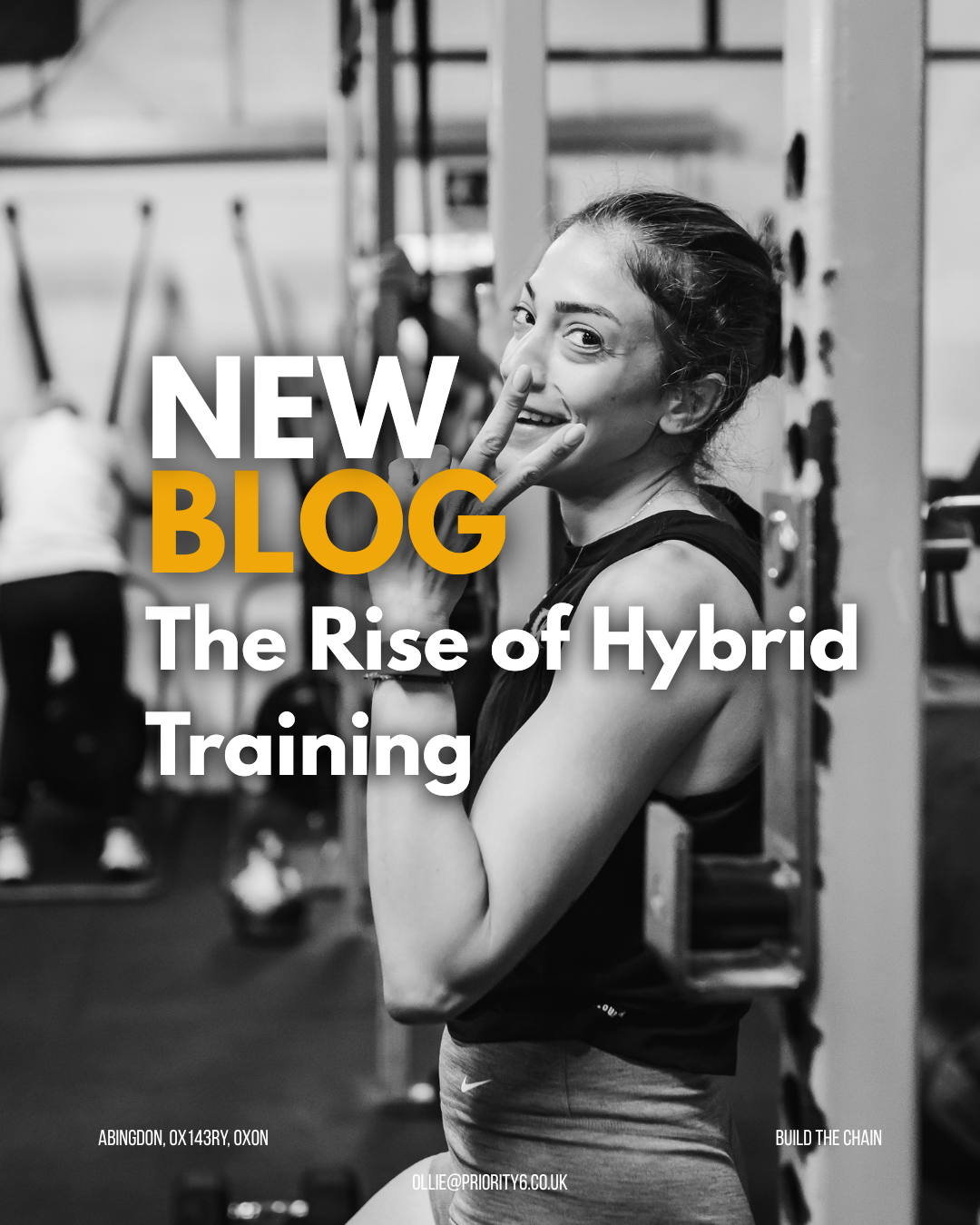
The Rise of Hybrid Training... What It Is, Why It Matters, and Where It's Going
Over the last decade, the fitness world has evolved faster than ever, and one of the most significant shifts we’re seeing, both globally and here in Abingdon, is the rise of hybrid training.
What started as a fringe concept is now a dominant force in gyms, group programs, and personal coaching. You’ve probably seen it in action, someone combining strength work with endurance training, or mixing traditional barbell lifts with conditioning circuits, sprints, or mobility flows... tell me a fitness conversation that doesn't include the word Hyrox at the moment!
But this isn’t just a trend. It’s the natural evolution of training for people who want to feel fit, perform well, and move for life, not just chase numbers or aesthetics.
What Is Hybrid Training?
Hybrid training is about developing multiple athletic qualities at once, most commonly strength and endurance, without sacrificing one for the other.
In practice, it might look like:
- Combining barbell lifts with running or rowing.
- Building muscle while improving cardiovascular fitness.
- Balancing conditioning sessions with heavy compound lifts.
- Using movement as a tool to improve performance in and out of the gym.
It’s the kind of training we now regularly deliver at our gym P6 in Abingdon, helping members get stronger, fitter, and more capable without burnout.
Where Did It Come From?
Hybrid training has roots in:
- CrossFit: which broke the mould by combining Olympic lifting, gymnastics, and metabolic conditioning.
- Military and tactical fitness: where both strength and stamina are essential.
- Athletic strength and conditioning: where multi-dimensional fitness is the standard.
CrossFit, in particular, deserves credit for bringing the idea to the mainstream. It challenged the binary thinking that said you had to either be a bodybuilder, a runner, or a lifter, not all three.
Now, hybrid training is shaping how we coach here in Priority 6, giving people access to a system that builds muscle, improves endurance, and supports health over the long haul.
Why You Should Care?
1. It Trains You for Life, Not Just the Gym
Hybrid training prepares you for the real world, where you might need to run, lift, climb, or recover well. It’s practical, efficient, and sustainable, ideal for busy professionals and parents looking for more than just aesthetics.
2. It Supports a Lean, Athletic Physique
By combining resistance training with structured conditioning, hybrid training promotes muscle growth without excessive bulk, while improving metabolic health.
3. It Balances the Nervous System
Too much lifting? You stagnate. Too much cardio? You plateau. The hybrid model balances intensity and recovery, something we prioritise when programming for clients at our facility.
4. It Keeps You Engaged and Progressing
One of the biggest challenges in fitness is staying consistent. Hybrid training naturally builds variety into your week, making it easier to stay motivated and progressing, especially when supported by a coaching team who knows how to individualise it.
Where Hybrid Training Is Going?
The hybrid approach is evolving fast, and we’re seeing its influence grow across the industry.
- More personalised programs: Combining data from wearables, heart rate zones, and movement screens to deliver training that adapts to the individual.
- Smarter recovery integration: Programming that considers stress, sleep, and lifestyle, not just sets and reps.
- Community-led systems: At gyms like ours in Abingdon, members thrive because of shared values, not just shared workouts
From professional athletes to parents who want to move better and feel stronger, the hybrid model is becoming the standard, not the exception.
How to Start (Even If You’re Not a Competitive Athlete)
You don’t need to train like a triathlete or enter a CrossFit comp to benefit. In fact, the average member who walks into our Abingdon gym wants the same thing you probably do, to get stronger, fitter, and feel better with less joint pain, more energy, and more confidence.
A balanced week might look like this:
- Day 1: Strength-focused (e.g., squats and pressing) + 10-minute finisher
- Day 2: Zone 2 aerobic work (e.g., 40-minute bike or run) or our Crossfit Conditioning workouts.
- Day 3: Pull-focused strength + core + accessory
- Day 4: Short interval conditioning or metcon
- Day 5: Recovery-focused session or mobility + zone 2
The structure flexes based on your goals, training age, and stress levels, which is exactly how we personalise things for our members here in Abingdon, we give them the blueprint for daily success!
Hybrid training isn’t just “a bit of this and a bit of that.” It’s a structured, thoughtful approach to building a body that’s fit for anything, in the gym and in life.
And if you're in or near Abingdon, it’s easier than ever to access this kind of programming with experienced coaches who understand the balance between intensity, recovery, and long-term progress.
Whether your goal is to run your first 5K, hit a new deadlift PB, or simply feel more capable and resilient, hybrid training gives you the tools to do it, without burning out or falling into the trap of one-dimensional fitness.
About the Author
Ollie Campbell is a coach based in Abingdon, helping busy adults build strong, functional, resilient bodies through strength training, conditioning, and smart recovery systems. The mission? Lifelong health and performance, without the noise.
.png)
.png)
.png)
.png)