Related

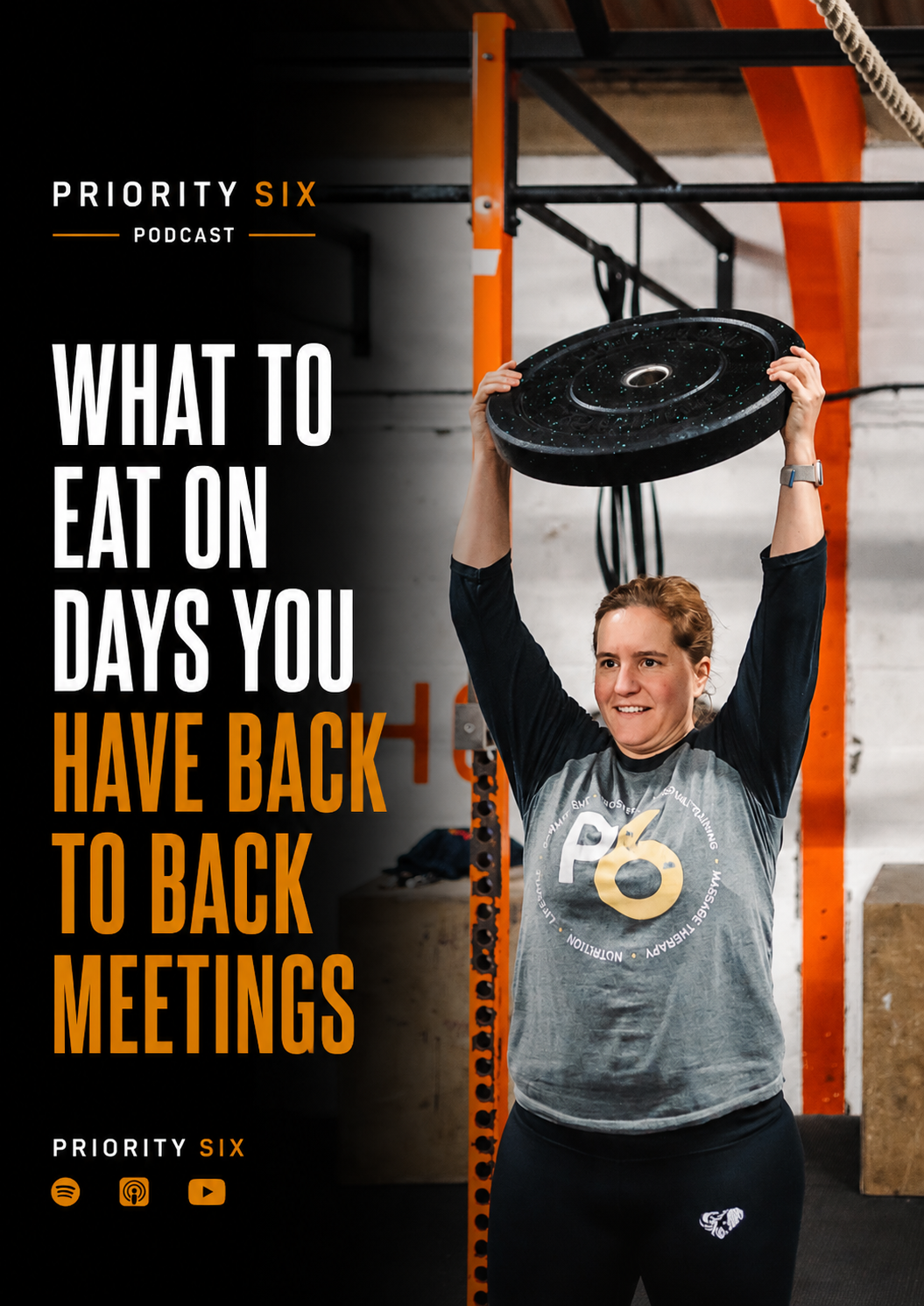
You're Not Failing at Nutrition. Your Calendar Is Choosing Your Meals For You
Your diary is back-to-back from eight until gone six. You knew today would look like this, because most of your days do.
By two o'clock you haven't eaten anything that wasn't beige, or you haven't eaten anything at all.
By the time you get home, you are not hungry. You are starving, and starving makes every decision for you.
This is not a discipline problem. It is a planning problem wearing a willpower costume, and almost nobody has explained the actual fix.
Your Calendar Is Already Choosing Your Meals
Here is what is actually happening on a day like this. Every meeting is a small decision. What to say, what to push back on, what to let go, who to manage, what to remember for later. None of that feels like food, but it draws on the exact same mental resource that decides what you eat.
By the middle of the afternoon, that resource is running low. Not because you are weak willed. Because you have made several hundred small decisions already, and your brain treats "what should I eat" as one more decision it would rather not make. So it stops making it properly. It defaults, to whatever is nearest, fastest, and offers the most reward for the least effort. That is almost never the chicken and rice you planned on Sunday. It is the biscuits left over in the meeting room, or nothing at all.
Why Skipping Meals Backfires By Evening
Going eight or nine hours on coffee and adrenaline does not make you disciplined. It makes you primed.
Your body does not experience a long gap between meals as restraint. It experiences it as a deficit it intends to correct, fast. By the time you are home, the decision-making resource that was already low is now empty, and your body is actively pushing you towards quick, dense, easy calories. That is the exact moment most people make the choice that undoes the rest of their day, not from a lack of discipline, but because the conditions for a poor decision were built in eight hours earlier, one meeting at a time.
This is why the person who trains hard, eats sensibly most of the week, and still cannot shift the last bit of body fat is so often the person with the most brutal calendar. The training was never the problem. The eight hour gap is.
I see this constantly with clients who are convinced they will "make up for it" at dinner by eating cleanly. They rarely do. What actually happens is a large, fast meal eaten quickly because the body is now in genuine deficit, followed by snacking through the evening because that meal didn't fully register as satisfying. The damage isn't one bad dinner. It's the entire second half of the day operating in a state your body is trying to correct rather than maintain.
The Fix Is Removing the Decision, Not Adding Discipline
Most advice for busy people about food is really advice about willpower. Plan better. Resist the biscuits. Be stronger in the moment. That advice fails on back-to-back days for a simple reason. There is no moment. There is no gap where you calmly weigh up your options and make a good call. The whole day is the obstacle, start to finish.
The actual fix is to remove the decision entirely, before the day even starts.
Pick two or three things you can eat with zero preparation and zero thinking, and have them physically on you. A shaker with whey and water. Two boiled eggs from a batch you did on Sunday. A tin of fish. A pot of full fat Greek yoghurt. A bag of biltong. None of these need a fork, a microwave, or five spare minutes you do not have. They need to already be in your bag before you leave the house.
Then attach eating to a fixed point in the day rather than waiting for a gap to appear. Between two specific meetings, every single time, regardless of how the day is going. Not "when there's a chance." A chance will not arrive on a day like this. A fixed trigger will, because you built it in rather than hoped for it.
None of this needs to be exciting. It is not a meal, it is a refuelling stop, the same way you would not skip putting fuel in a car halfway through a long drive because the petrol station wasn't appealing. The goal is repeatable, not impressive. A boring shaker you actually drink at eleven beats an excellent lunch you were planning to eat at two and never get to.
The One Thing to Do Today
You now know the actual mechanism behind a bad meeting day. It is not weak willpower at four in the afternoon. It is a calendar that has been quietly making your food decisions for you since eight in the morning, and a body running on empty by the time you finally get home.
Before your next back-to-back day, do one thing. Put a recurring five-minute appointment in your diary between two of your worst meetings, call it whatever you like, and put one no-prep protein source in your bag tonight so there is nothing left to decide tomorrow.
That is the whole adjustment. Not a new diet. Not more discipline. One fixed appointment, one item in your bag, decided the night before.
If you need help creating a nutrition plan, tweak to your training system and want to get in touch, please click the email link below and let me know what your sticking points are and I'll be in touch personally to invite you in for a free chat about how I'd help you tackle those issues!
OC
About the Author
Ollie Campbell is a British strength and conditioning coach, specialist fat loss coach, author of Build The Chain, nutrition coach, and founder of Priority 6 in Abingdon, Oxfordshire.
Book a free No Sweat Intro at priority6.co.uk to talk through what that looks like for you specifically. Click here
Priority 6 | Abingdon's longest-standing independent gym | Crossfit, Weight Loss, Fat Loss, Strength, Performance, Longevity www.priority6.co.uk | @priority6 | ollie@priority6.co.uk
.jpg)
.png)
.png)

.png)
.png)