Related

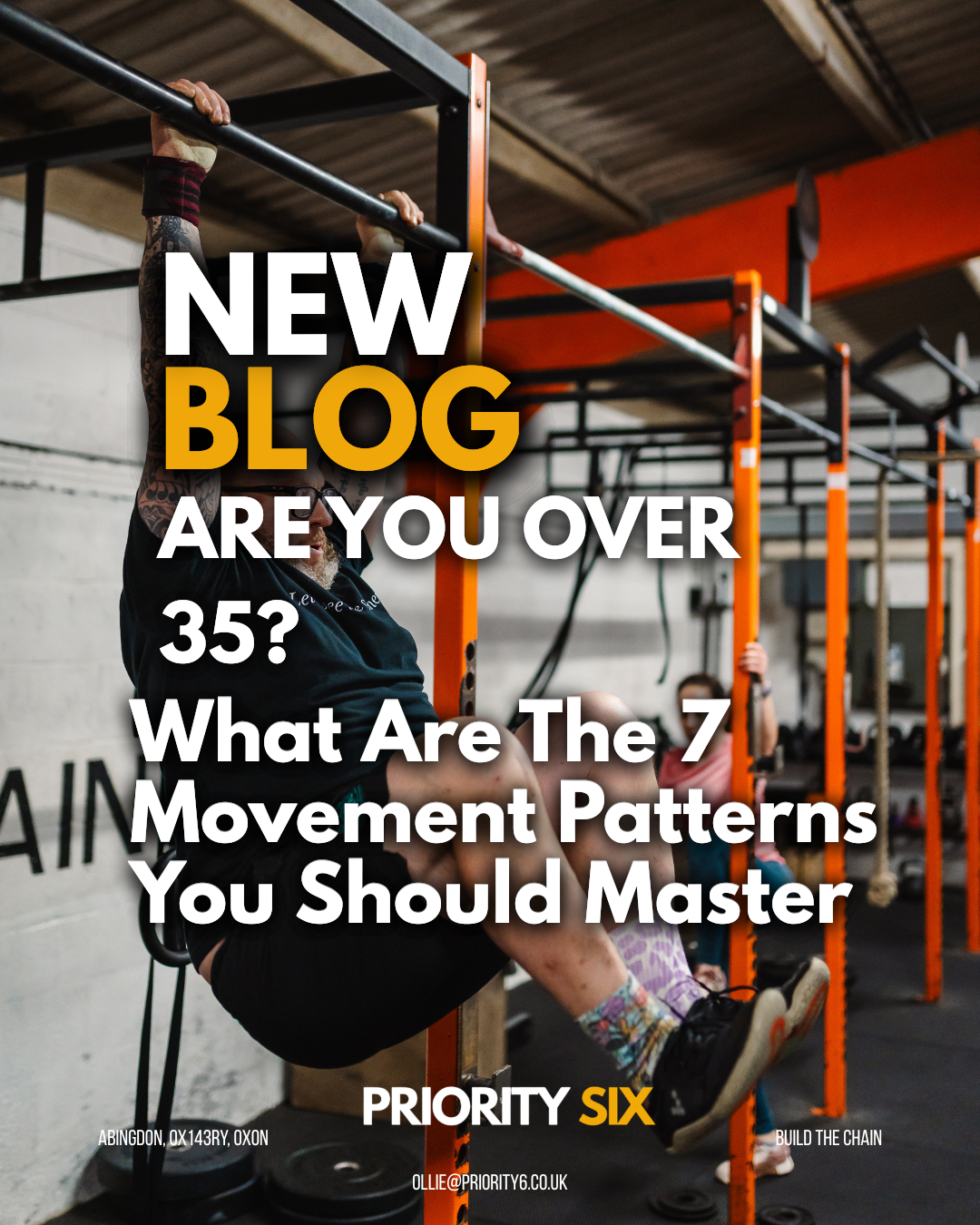
Training for Life What Are The 7 Movement Patterns You Should Master by 40?
By 40, fitness stops being about aesthetics.
It becomes about independence.
Can you get off the floor without using your hands?
Can you lift your suitcase into the overhead compartment without your back tightening?
Can you carry heavy shopping bags without shifting side to side?
At some point, the goal shifts. It’s no longer about proving how fit you are, it’s about preserving how capable you remain.
And capability comes down to movement.
There are seven foundational movement patterns your body was designed to perform. Master them, and you build strength that lasts decades. Ignore them, and decline speeds up quietly in the background.
The 7 Movement Patterns (At a Glance)
Squat
Hinge
Lunge
Push
Pull
Rotation
Carry
These patterns reflect how your body functions in real life, integrated, coordinated, and purposeful.
Let’s break them down.
1. The Squat
What it is:
Bending at the knees and hips to lower yourself, then standing back up.
Why it matters:
Getting off the floor. Standing from a chair. Climbing stairs. Protecting your knees.
Self-check:
Can you sit in a deep bodyweight squat for 60 seconds?
Can you squat your bodyweight with good control?
If you struggle:
Start with box squats, goblet squats, and ankle mobility work.
If you're progressing:
Front squats, tempo squats, or paused squats build control and resilience.
A strong squat supports bone density, joint health, and long-term independence.
2. The Hinge
What it is:
Bending at the hips while maintaining a neutral spine — think deadlifts.
Why it matters:
Most back injuries come from poor hinging mechanics.
Self-check:
Can you hinge without rounding your back?
Can you deadlift your bodyweight safely?
If you struggle:
Master the kettlebell deadlift first. Practice hip hinge drills against a wall.
If you're advancing:
Romanian deadlifts, trap bar deadlifts, or heavy barbell hinges.
The hinge builds the posterior chain, glutes, hamstrings, and spinal stability, the muscles that protect your back as you age.
3. The Lunge
What it is:
Single-leg strength and control.
Why it matters:
Life happens one leg at a time, walking, running, climbing, changing direction.
Self-check:
Can you perform 10 controlled lunges per leg without wobbling?
Do your knees track cleanly?
If you struggle:
Reverse lunges and split squats improve stability.
If you're progressing:
Walking lunges, deficit lunges, or loaded Bulgarian split squats.
Single-leg strength is a major predictor of fall risk and joint resilience.
4. The Push
What it is:
Pressing weight away from your body.
Why it matters:
Overhead storage, pushing doors, bracing during impact.
Self-check:
Can you perform 10 strict push-ups?
Can you press weight overhead without compensating?
If you struggle:
Incline push-ups and dumbbell presses.
If you're progressing:
Barbell presses, tempo work, or single-arm variations.
Strong pushing builds shoulder stability and core integration.
5. The Pull
What it is:
Pulling weight toward your body, rows, pull-ups, hangs.
Why it matters:
Desk posture is destroying shoulder health.
Self-check:
Can you hang from a bar for 30 seconds?
Can you control a strict row without shrugging?
If you struggle:
Ring rows and band-assisted pull-ups.
If you're advancing:
Weighted pull-ups or heavy barbell rows.
Grip strength and pulling strength are both linked to longevity.
6. Rotation
What it is:
Controlled twisting powered by the hips, stabilised by the core.
Why it matters:
We rotate constantly, getting in cars, lifting awkward objects, playing sport.
Self-check:
Can you rotate through your thoracic spine without lower back discomfort?
Can you control anti-rotation movements like Pallof presses?
If you struggle:
Start with cable or band anti-rotation drills.
If you're advancing:
Medicine ball rotational throws or landmine rotations.
Untrained rotation often leads to stiffness or uncontrolled spinal movement.
7. The Carry
What it is:
Moving under load.
Why it matters:
This is real-world strength.
Self-check:
Can you carry half your bodyweight in each hand for 30 seconds?
Can you walk 20 metres without posture collapsing?
If you struggle:
Start with lighter farmer’s carries or suitcase carries.
If you're progressing:
Heavy front rack carries, uneven carries, or overhead carries.
Carries develop grip, core stability, posture, and resilience, traits that transfer directly to daily life.
What Happens If You Don’t Train These Patterns?
The decline is subtle at first.
Mobility stiffens.
Balance worsens.
Recovery slows.
Strength drops.
Then:
Everyday tasks feel harder
Injuries happen more often
Confidence declines
Independence shrinks
This isn’t dramatic. It’s gradual. And it’s preventable.
Score Yourself
Rate each pattern from 1–5:
1 = Painful or unstable
3 = Functional but weak
5 = Strong, controlled, and confident
If you score below 3 in more than two patterns, your training needs structure, not just intensity.
What This Looks Like in Practice
At our facility in Abingdon, programming is built around these patterns, not trends.
A balanced week might include:
Squat + carry focus
Hinge + pull strength
Lunge + push session
Rotational core integrated throughout
You don’t need endless exercises.
You need consistent exposure to the fundamentals.
Mastery comes from repetition under intelligent load.
By 40, fitness isn’t about chasing youth.
It’s about preserving capacity.
Strength without balance is fragile.
Cardio without strength is limiting.
Mobility without load is incomplete.
Master the patterns.
Load them intelligently.
Repeat them for decades.
That’s how you train for life.
.png)
.png)
.png)
.png)