Related

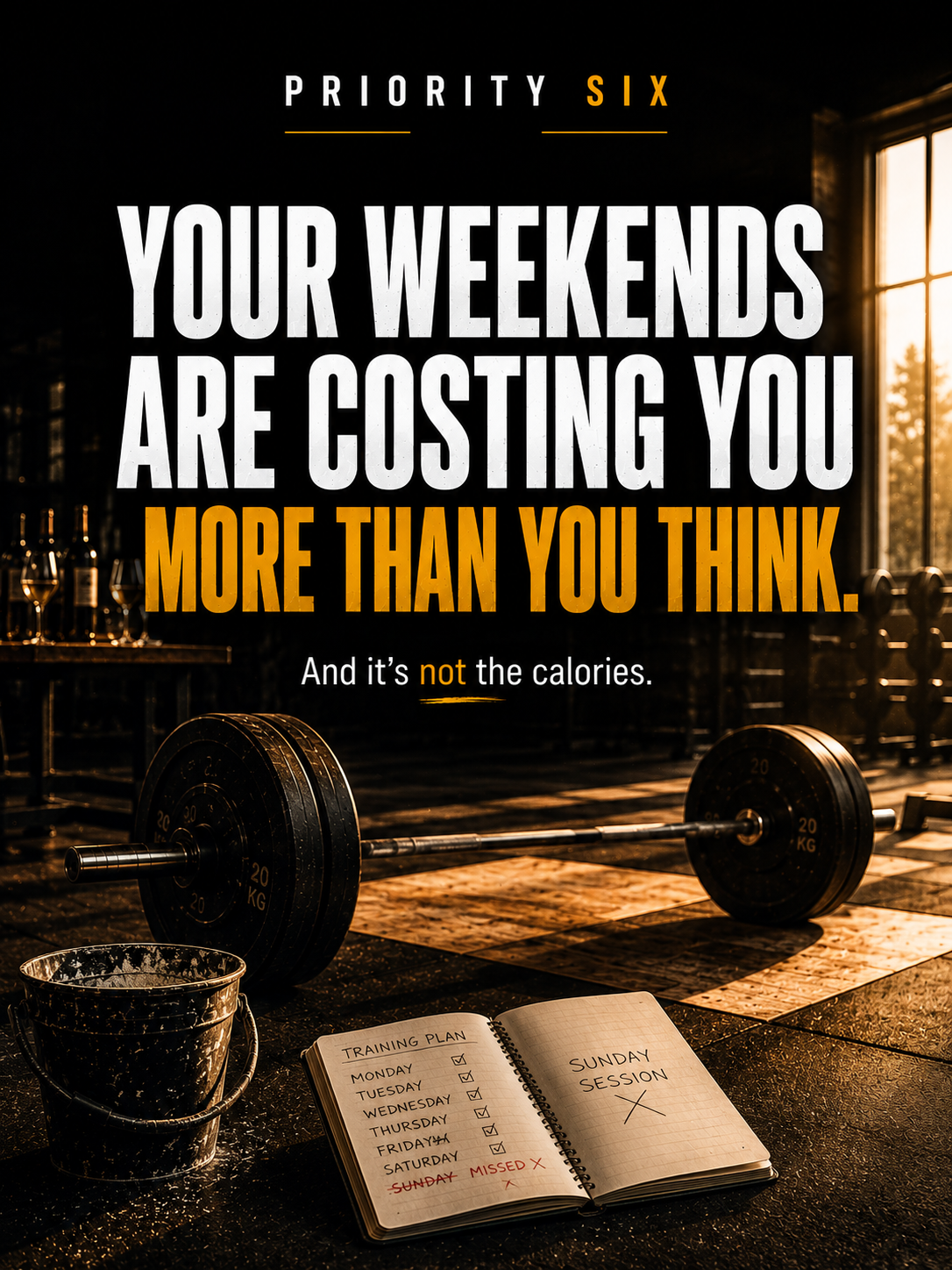
The Real Cost of Weekend Drinking Is Not the Calories
Every weekend, the same mental negotiation starts up.
There is a social event. There will be drinks. You are trying to lose weight, or build muscle, or both. You have been consistent lately and you do not want to undo it. But it is summer, and you are allowed to have a life.
Most people handle this in one of two ways, and both lead somewhere frustrating.
They either draw a hard line and white-knuckle it until the line breaks, usually spectacularly, usually followed by guilt and a fresh round of all-or-nothing thinking. Or they drink on autopilot, vaguely aware it is probably slowing things down, and wonder why progress keeps stalling without ever making the connection.
Neither of those is a strategy. They are both just reactions.
The honest conversation about alcohol and fitness is not one most content wants to have, because it does not resolve neatly. Alcohol is not the enemy. It is also not a free pass. It is a variable. And the only useful question is whether the cost it carries is worth paying at this particular point in your training and your life.
The Actual Cost
In fitness conversations, alcohol almost always gets reduced to calories. A glass of wine is roughly 120. A pint of beer is around 180. If you track your intake this is manageable. If you do not, it adds up quietly.
But the calories are the least interesting part of the problem.
What alcohol genuinely disrupts is sleep. Even moderate amounts reduce deep sleep and REM, the stages where physical recovery, hormonal restoration, and the adaptations from your training sessions actually occur. You can sleep eight hours and wake up feeling like you slept five. For someone training three or four times a week, sleep is not optional background noise. It is the mechanism by which training produces results. Compromise it consistently and you are doing the work and not getting the return.
Beyond sleep, alcohol suppresses testosterone, elevates cortisol, and blunts muscle protein synthesis for up to 24 hours after consumption. It lowers inhibition in ways that tend to produce decisions around food, late-night eating, skipped training the following morning, a pattern of compensation and catch-up that creates more disruption than the drinks themselves ever did.
The cost is real. The question is whether it is worth paying. And that depends on three things.
Three Questions to Answer Before You Decide
Are you in a performance block?
If you have a competition, a race, a physical test, or any event where your output matters in the next few weeks, the calculation shifts considerably. Alcohol disrupts the specific physiological processes your training is designed to drive: sleep quality, recovery rate, hormonal environment. When those things matter most is not the time to compromise them.
It is also worth being honest about whether you are actually in a performance block or a general fitness phase. Those are different things with different requirements. If you want to run a personal best in the next 90 days, that is performance. If you want to stay consistent, feel good, and keep making progress over the long term, that is fitness. Both are valid. But they do not carry the same demands.
Is body composition your primary goal right now?
Alcohol calories are processed before fat. When your body is metabolising alcohol, fat oxidation is paused. In isolation this is not catastrophic. But combined with the sleep disruption, the suppressed testosterone, and the food decisions that tend to follow a few drinks, the cumulative effect on body composition over weeks and months is measurable.
If losing fat or building muscle is the number one priority right now, drinking will not derail progress built over months. But it will slow things down. The honest question is whether you are comfortable with that trade. Some people are, and that is a reasonable choice. Others are frustrated by stalled progress they have not yet connected to their weekends.
Do you need to be sharp next week?
This one gets skipped because it has nothing to do with body composition, but it matters.
A significant presentation, a difficult week, a long stretch of travel, an important commitment that requires you to be functional: if next week is one of those weeks and you are already running close to empty, disrupted sleep on Saturday night has a cost that shows up on Monday morning. That is worth factoring in.
If You Are Drinking
A drink or two at a social occasion, approached with intention, is not going to undo progress built over weeks and months. The actual damage tends to come not from the alcohol itself but from everything that surrounds it.
Eat a solid meal before you go, built around protein. It slows absorption and makes it significantly easier to avoid the late-night eating that tends to cause more disruption than the drinks. Choose lower-calorie options where you can: spirits with soda water, wine, lighter beer. Arrive with a rough sense of what the evening looks like, not as a rigid rule but as a frame.
And do not compensate the next day. Eating very little on Sunday because you drank on Saturday is more disruptive to your metabolism and your relationship with food than the alcohol was. Get back to normal eating, move your body, and carry on.
If You Are Not Drinking
The worst version of not drinking is spending the evening resentful about it.
If you are choosing to skip, make it a genuine choice rather than an act of willpower you are performing for the room. Have a drink order ready, sparkling water with lime, whatever you actually like, and give it no more energy than that. Nobody is paying as much attention to what is in your glass as you think they are.
Skipping alcohol at one event is not a sacrifice of enjoyment. It is a trade for something you have decided matters more at this point in time.
What to Do
Before your next occasion where alcohol is on the table, work through the three questions.
Am I in a performance block? Is body composition my primary goal right now? Do I need to be sharp next week?
If the answer to any of them is yes, you have your answer and you have arrived at it through reasoning rather than impulse.
If the answer to all three is no, drink if you want to. Do it with intention rather than on autopilot. And move on without guilt.
The decision is not the hard part. Most people already know what they should do. The hard part is making the decision deliberately, before the evening makes it for them.
About the Author
Ollie Campbell is a British strength and conditioning coach, specialist fat loss coach, author of Build The Chain, nutrition coach, and founder of Priority 6 in Abingdon, Oxfordshire.
Book a free No Sweat Intro at priority6.co.uk to talk through what that looks like for you specifically. Click here
Priority 6 | Abingdon's longest-standing independent gym | Crossfit, Weight Loss, Fat Loss, Strength, Performance, Longevity www.priority6.co.uk | @priority6 | ollie@priority6.co.uk
.jpg)
.png)
.png)
.png)
.png)